| In today’s ever-changing workplace, one thing’s certain. Standing still is the same as falling behind. For Executive Assistants (EAs) and Personal Assistants (PAs), continuous learning isn’t just a “nice to have”; it’s a professional survival skill. The role has evolved far beyond diary management and travel booking. EAs and PAs today are strategic partners, project coordinators, and tech-savvy problem-solvers who keep organisations running smoothly. So, why embrace learning? Let’s break it down. 1. The World Keeps Moving (and So Should You) The pace of change in technology and office dynamics is relentless. From new AI tools automating routine tasks to hybrid working reshaping team communication, the modern assistant’s toolkit needs constant updating. As Peter Senge explained in The Fifth Discipline (1990), organizations that thrive are “learning organisations”, ones where people continually expand their capacity to create. By investing in your learning, you’re not just keeping up with your company; you’re helping it adapt and innovate. Think about it this way: the more you learn, the more valuable your insights become. You’re in a central, trusted role. You see how systems, people, and workflows connect. A well-informed EA or PA doesn’t just execute tasks; they anticipate needs and find smarter ways to deliver results. 2. Learning Builds Confidence and Credibility It’s empowering to know your stuff. When you proactively upskill, whether it’s mastering a new project management platform, developing negotiation skills, or improving data analysis, you boost your confidence and credibility. Adult learning theorist Malcolm Knowles (1980) highlights that adults learn best when they see the immediate value to their work or life. For EAs and PAs that practical link is crystal clear: every new skill learned has a direct impact on performance and perception. The ripple effect? When you demonstrate adaptability and curiosity, leaders notice. You move from “support staff” to “strategic partner.” Continuous learners stand out as professionals who don’t wait to be told what’s next – they make it happen. 3. Learning Keeps You Engaged and Future-Proof Let’s be real. Even the most organised calendar or seamless event loses its spark if every week looks the same. Learning injects energy and curiosity into your routine. It keeps boredom and burnout at bay by adding a sense of progress and purpose. From a psychological perspective, Edward Deci and Richard Ryan’s Self-Determination Theory (1985) tells us that humans are naturally motivated by competence, autonomy, and relatedness. Continuous learning ticks all those boxes: you build competence through skill development, autonomy by expanding your professional range, and relatedness by connecting with others through shared development experiences. And in a world where automation is reshaping many administrative tasks, learning helps future-proof your career. After all, no algorithm can replace emotional intelligence, critical thinking, or strategic foresight and those are exactly the qualities you enhance when you keep learning. 4. You Lead by Example As an EA or PA, you’re often the connective tissue of a team. You are trusted by leaders and relied upon by colleagues. Your approach to personal development sets a tone. When you take ownership of your learning, you send a powerful message: growth is part of the role. It’s not about doing another training course for the sake of it; it’s about staying curious, open-minded, and proactive. Whether it’s through podcasts, mentorship, or formal study, every bit of knowledge shapes your professional identity. In Summary Continuing to learn keeps you adaptable, respected, and motivated. It aligns with modern learning theory and with the emerging demands of the workplace. For EAs and PAs, it’s the key to evolving from “doer” to “decision enabler.” So next time you see a new tool, attend a workshop, or explore an idea, lean into it. That’s not just professional development; that’s career sustainability. To put it simply: the best EAs and PAs don’t wait for change. They learn their way into the future. |
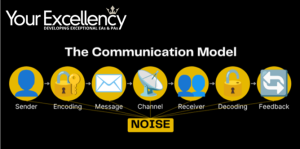
What if the problem isn’t your communication…but their interpretation? Why every EA & PA should know the Communication Model (Lunch n Learn Issues 302 & 303)
Have you ever walked away from a conversation convinced you had explained something perfectly, only to discover later that the other person had interpreted it completed differently?