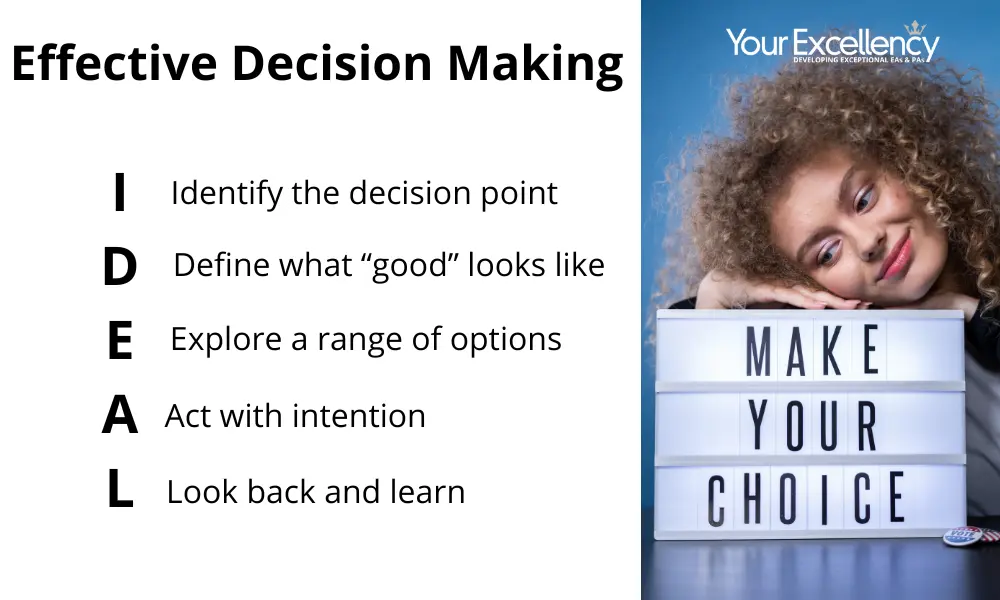
| Welcome to this Issue 272 and a continuation of learning on Effective Decision Making. If you missed last week’s Issue you can catch up here. Let’s consider the D and E of the IDEAL Decision Making Model. Define What “Good” Looks Like Instead of simply choosing the first acceptable option, take time to clarify what a good outcome would be. Using a “well-formed outcome” approach can help: State the decision goal in positive terms: “I will…” Picture success as if it has already happened Make it specific, motivating and realistic Ensure it is within your control This gives meaning and direction to your decision, making the right choice easier to spot. Explore a Range of Options Effective decisions come from considering multiple perspectives and ideas, not just the obvious or familiar ones. Use two complementary thinking styles: Logical Thinking (fact-based) What information do you have? What are the constraints, risks or requirements? What does the data say? Creative Thinking (imaginative) Use creative visualisation: imagine the future if you choose Option A, B or C Step into others’ shoes: how would colleagues, customers or future-you view this decision? Try lateral-thinking tools like random words or images to spark new associations When you combine logic with creativity, you see a richer landscape of possibilities, often leading to innovative, well-balanced decisions. |